


Most advice on choosing photos for a competition comes as a list: sharp focus, strong contrast, the rule of thirds. This piece is not that. We asked POSTRH, founder and sole juror of MONO ORBIT AWARDS, what a juror actually looks for in a submission. In short: photographs whose response to the theme is in the image itself, that show the photographer's own decisions rather than only an interesting building, and that hold up on a second look.
In the first edition, every eligible photograph is reviewed by him alone, within THE CLOSED ROOM, with no public vote and no committee. That makes his way of looking worth knowing.
Detail
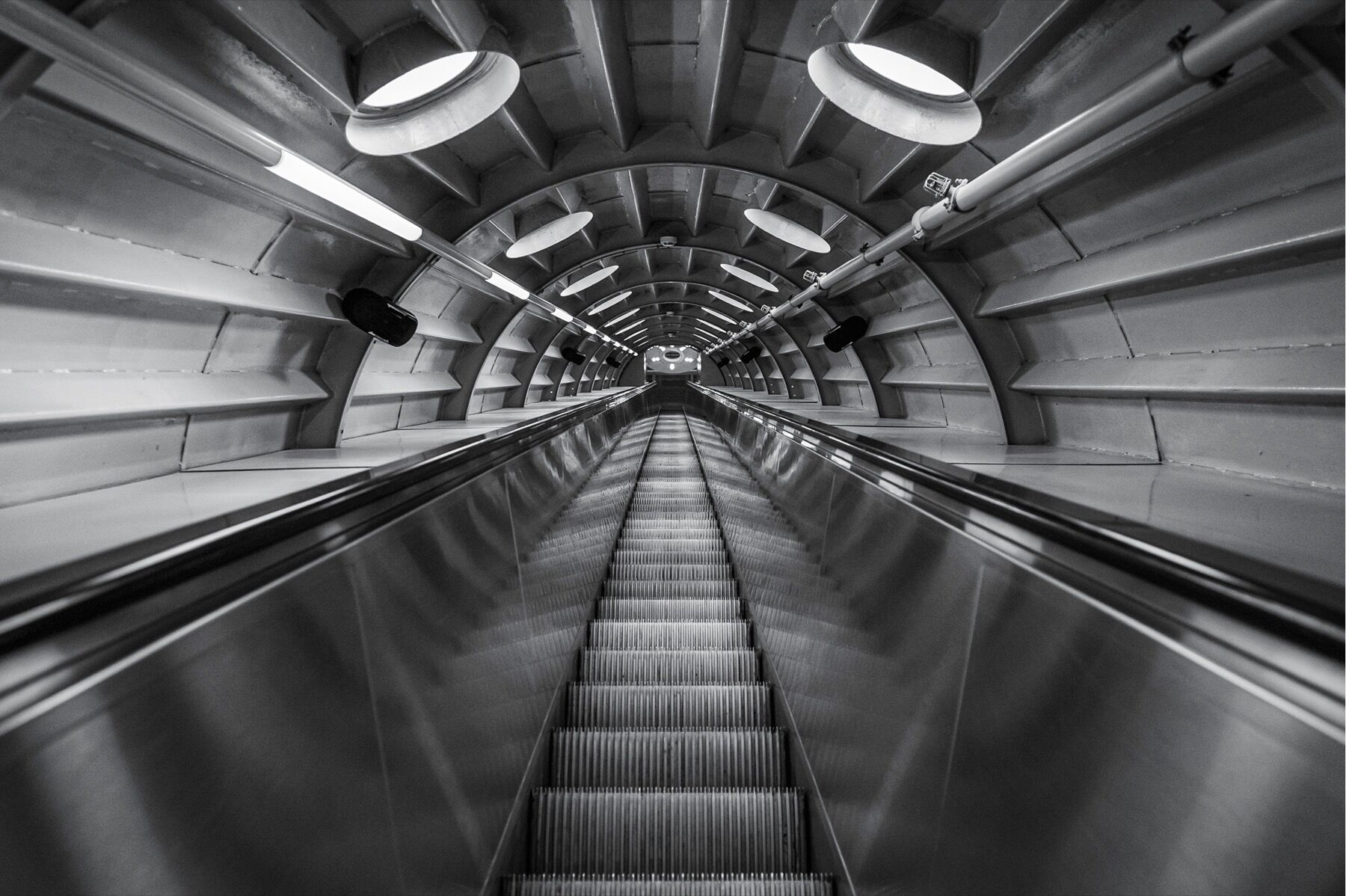
An interesting building is not yet an interesting photograph
Asked what makes him stay with a photograph longer, POSTRH starts with how the subject is presented.
"In architectural photography, an interesting building does not have to mean an interesting photograph," he says.
"I look at whether the author managed to go beyond the appeal of the structure itself and offer their own composition, spatial relationship or point of observation. Whether they see the fragment, or only the whole."
He also looks at whether the photographer managed to show their own fascination with the place, or with the building itself. And sometimes the smaller thing is the better one: "Sometimes an unassuming fragment of architecture turns out to be more interesting than the most spectacular construction."
There is one more test: "It also matters to me whether a photograph keeps its strength when you look at it again."
Intention
Intention is in the decisions, not the explanation
Juries often talk about intention, which can sound like a demand to explain yourself. POSTRH reads it the other way round.
"It cannot always be read unambiguously, and I don't think one should search for it at any cost," he says. What he looks at are the decisions visible in the image: the choice of perspective, the edges of the frame, the use of light, the way space is organised. Together, they show whether a photograph proposes more than a record of what a place looks like.
He doesn't expect every detail to come with a reason. "A photograph should keep a certain independence from its own description. I prefer it when the photograph speaks for itself. Not through a description."
"An interesting building does not have to mean an interesting photograph."
Theme
Respond to the theme instead of illustrating it
Every edition has a theme, and the first one is EMISSION. The easy route is to reach for its most obvious symbols. POSTRH suggests slowing down first: "It's worth thinking about the meanings of the theme before we start looking for its most obvious symbols."
"With EMISSION, it isn't only about chimneys, factories or visible pollution," he says. The theme can be read through architecture, infrastructure, the transformation of landscape and the traces of human activity, and through the less obvious relationships between the natural environment and built space.
The condition is the same as with intention: "The photograph's connection to the theme should exist in the image itself, not only in the description the author attaches to it."
Monochrome
When monochrome is a language, and when it is only missing colour
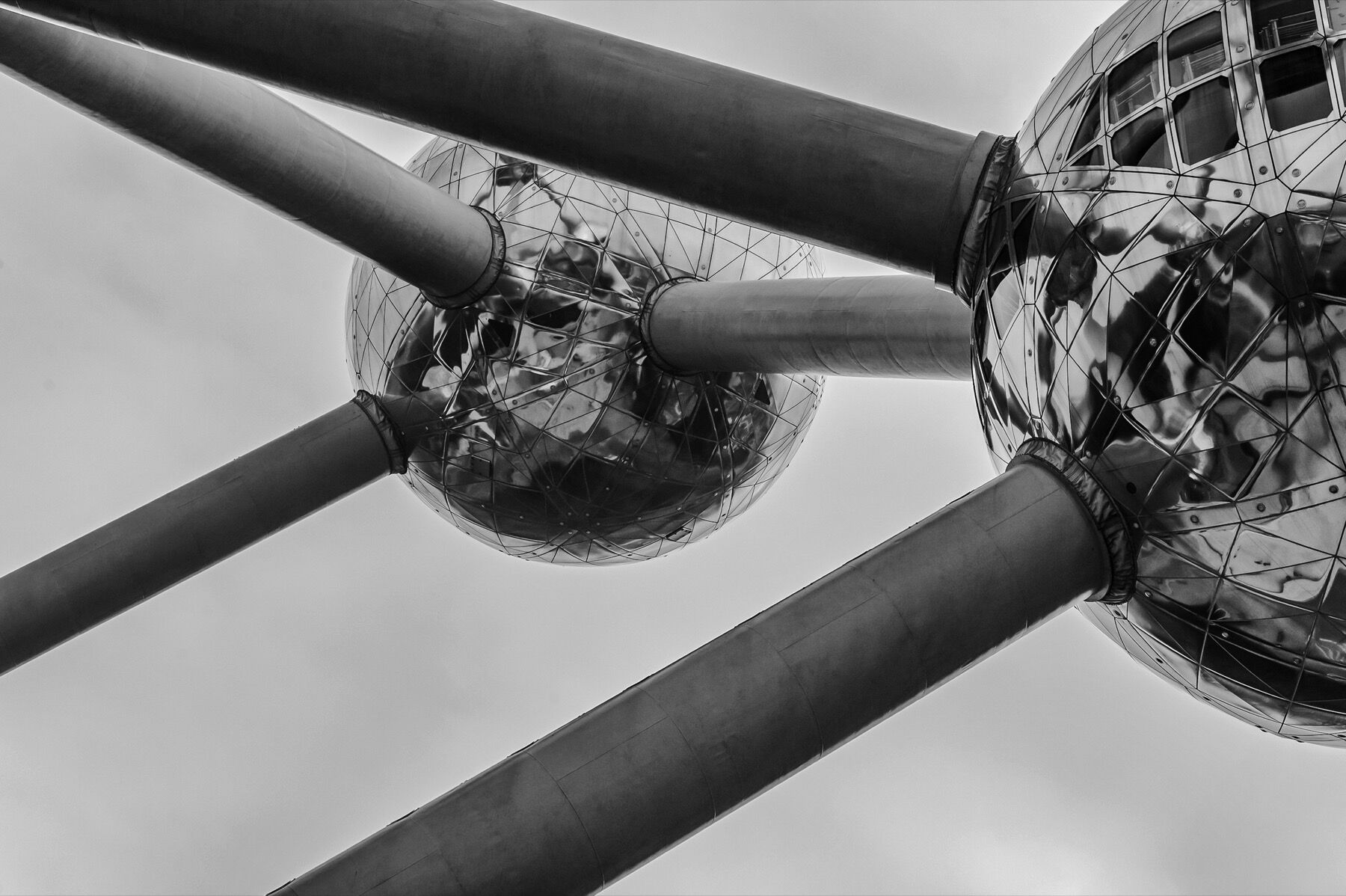
For a black and white photography competition, this is the central question. POSTRH's answer: monochrome becomes a language "when it affects the way the photographed place is perceived, rather than being a purely aesthetic device."
He describes what actually changes when colour goes. "Colour can separate objects that, in a monochrome image, begin to form a shared plane. Tonal differences, in turn, can reveal structure, rhythm and spatial relationships we hadn't noticed before."
That doesn't mean a black-and-white photograph has to rely on strong contrast. "An image built from subtle shades of grey can be just as convincing, and sometimes more interesting."
And what the absence of colour gives him: "For me, the absence of colour removes noise, which in architectural photography often disturbs the way an image is received. The absence of colour also gives a photograph of architecture quiet and calm."
Selection
Choosing one to four photographs from your archive
An entry can hold between one and four photographs, and the Submission Guide is clear that sending more brings no advantage. POSTRH's advice on narrowing down starts with repetition: "I would start by eliminating the photographs that repeat almost the same observation."
The harder part is distance. "A photographer often stays attached to the circumstances in which an image was made, but the viewer doesn't know them," he says. "So it's worth trying to look at your own photographs without remembering the place, the effort or the story of how they were taken."
"Four photographs are not automatically a better entry than one," he says. He doesn't require a classic series either. "If the photographs differ formally, but each one is a convincing response to the theme, that diversity can be valuable." And one line that sums it up: "There's no need to fill the whole limit with weaker photographs."
Before you submit
What entrants tend to overlook
Before you submit, he says, look at the competition itself. It's easy to choose your most striking images and give too little thought to the character of the particular competition.
He speaks from experience. At EVI MONO AWARDS, the team's other competition, a large number of submissions did not fit the theme. Some of these photographs were nevertheless strong enough to be included in a separate Editorial Selection, presented outside the competition results. "A photograph can be very good and, at the same time, not respond to the theme," he says. For MONO ORBIT AWARDS, the team would like entries to be well thought through in relation to the theme, and he names one trap in particular: a photograph being monochrome is not, on its own, a reason to send it.
Two more things. One is leaning on the description: "Sometimes the text tries to give a photograph a meaning that's hard to find in the image itself." The other is the formal side: "An interesting piece of work still has to meet the entry rules."
THE ORBIT 12
After the selection
Twelve photographers from the first edition form THE ORBIT 12. Their work goes into a printed photographic album published through Blurb, a guaranteed part of the first edition's awards, and into the edition's digital catalogue. The selection also brings editorial presentation through MONO ORBIT and a place in the archive of selected photographers.
MONO ORBIT AWARDS / JURY PERSPECTIVE
A photograph that holds up on a second look, and needs no explanation to do it.
CURRENT EDITION / EMISSION
Entries close 6 January 2027.
JOIN THE ORBIT : enter EMISSION, the first edition